

Is Comprehensive Car Insurance Worth It in Kenya? Compare It with Third Party Cover
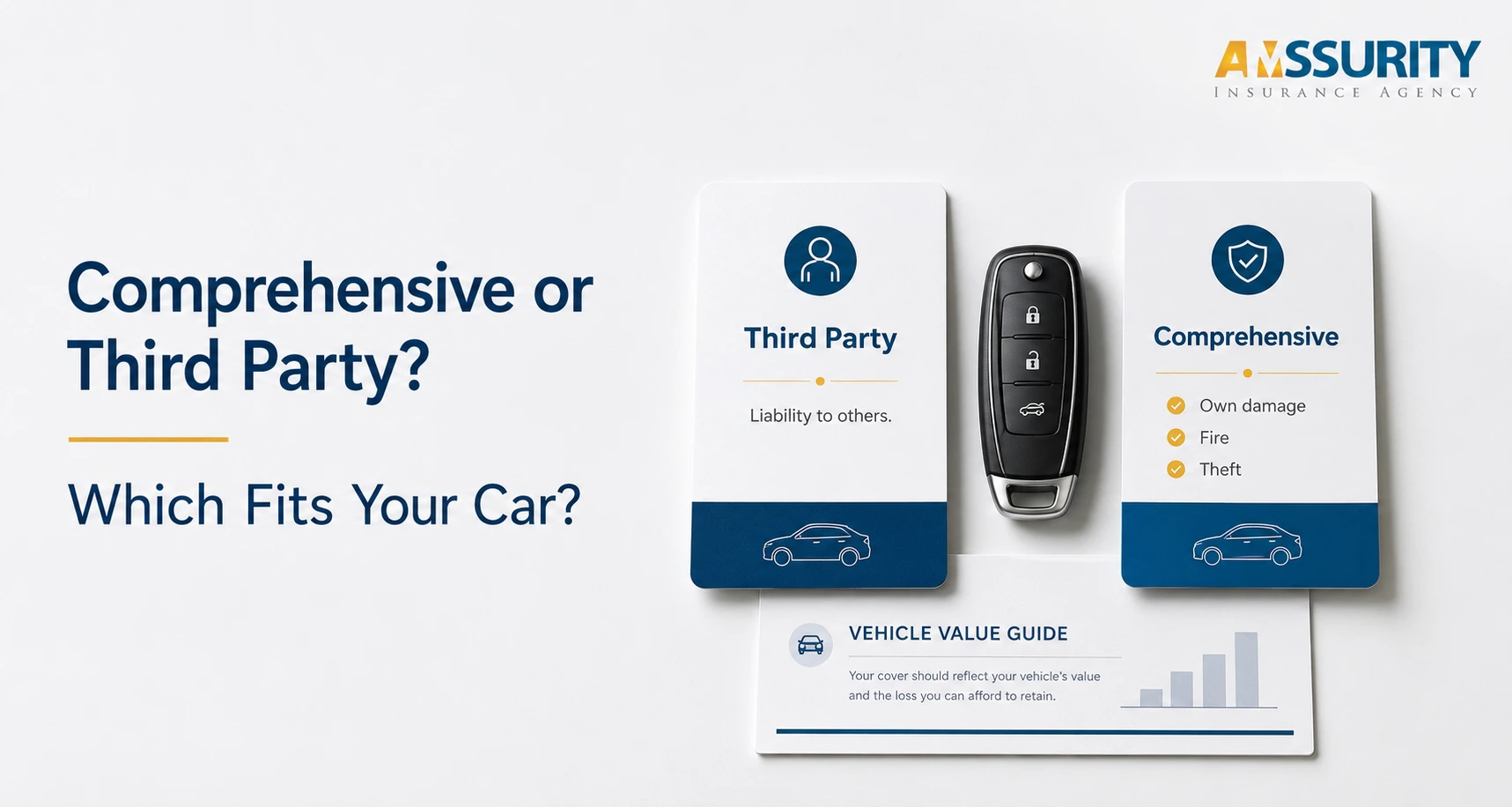
Comprehensive car insurance in Kenya costs more. The real question is whether you can afford the loss the cheaper cover leaves with you.
If your car were stolen, written off or badly damaged, could you repair or replace it without financial strain? If not, comprehensive car insurance may be worth it. If the vehicle has a low value and you can carry the loss yourself, third-party cover may be enough.
For a broader overview of the available options, see our guide to the types of car insurance in Kenya.
Table of Contents
Comprehensive vs third-party car insurance in Kenya
Third-party cover protects against covered and named liability to other people. Comprehensive car insurance may also cover insured loss or damage to your own vehicle.
| Cover type | What it covers | What you retain |
|---|---|---|
| Third Party Only | Third-party injury, death and property damage. | Damage, fire and theft affecting your car. |
| Third Party, Fire and Theft | Third-party liability, fire and theft. | Accidental damage to your car. |
| Comprehensive | Third-party liability, accidental damage, fire and theft. | Excesses, exclusions and losses above policy limits. |
What comprehensive car insurance in Kenya may include
The word “comprehensive” does not mean every possible loss is covered. It means the protection is broader than third-party cover.
Comprehensive car insurance in Kenya commonly covers insured accidental collision or overturning, fire, theft, malicious damage and specified natural events.
Depending on the insurer and product, it may also include or allow benefits such as:
- Windscreen and entertainment-unit cover.
- Towing and road rescue.
- Courtesy car or loss-of-use benefits.
- Excess protection.
- Political violence and terrorism cover.
These benefits are not identical across insurers. Check the applicable limits, conditions and additional costs in the quotation, policy schedule and wording.
When comprehensive cover is likely to make sense
1. The vehicle is financed
A lender has a financial interest in the vehicle and will ordinarily require insurance that protects the asset. The financier’s interest should be correctly noted in the policy. Confirm the lender’s requirements before paying.
2. Replacing the vehicle would disrupt your finances
Consider what would happen if the car were stolen or declared a total loss next month.
If replacing it would require expensive borrowing, deplete essential savings or leave you without dependable transport, comprehensive car insurance in Kenya may transfer a risk you should not retain.
3. The vehicle is essential to your household
A family may rely on one car for work, school runs, medical appointments and daily logistics. The decision is then about more than resale value.
Consider how long you could operate without it and whether you need towing, road rescue or a replacement vehicle benefit.
4. The vehicle has a meaningful current market value
The higher the amount at risk, the harder it may be to absorb a major repair or total loss.
The insured value should reflect a supportable market value. Over-insuring does not automatically produce a higher settlement, while under-insuring may affect an admissible claim.
5. You want protection beyond third-party liability
Third-party cover addresses liability to others. It does not become own-vehicle cover because the repair bill is high.
Comprehensive cover is the relevant option when you also want insured damage to your vehicle considered.
When third-party cover may be reasonable
Comprehensive cover is broader, but it is not automatically the right financial decision for every car.
Third Party Only may be reasonable where the vehicle has a low market value, the comprehensive premium and applicable minimum premium are difficult to justify, and you could fund repairs or replacement without destabilising your finances.
Third Party, Fire and Theft may provide a middle option where accidental damage remains with you, but theft or fire would still be difficult to absorb.
Before choosing lower cover, ask:
Can I genuinely afford the loss I am choosing to retain?
A low premium is not a saving if one uninsured accident creates a much larger problem.
When comprehensive car insurance may not be worth it
Comprehensive car insurance in Kenya may be harder to justify where:
- The vehicle has a low current market value.
- The premium is high relative to the amount at risk.
- You can comfortably fund repairs or replacement.
- The vehicle is not essential to your household or income.
- The available terms include restrictions that substantially reduce their usefulness.
This is not a decision based only on the vehicle’s age. Age, make, model, condition, use and availability of parts may all affect eligibility and pricing.
Four common vehicle scenarios
| Your situation | Likely direction | What to check |
|---|---|---|
| Financed private car, about KSh 3 million | Usually comprehensive | Financier interest, value, excess and repair terms. |
| Older private car, about KSh 350,000 | TPO or TPFT may fit | Eligibility, minimum premium and ability to fund a loss. |
| Uber, Bolt or other ride-hailing vehicle | Correct PSV or commercial cover | Declared use, passenger liability and authorised drivers. |
| Family’s only vehicle | Comprehensive may fit | Towing, road rescue, courtesy car and excess. |
Vehicle use must be declared accurately. Kenya’s insurance regulations distinguish private vehicles from vehicles used for business or other commercial purposes.
A private-car policy should not be assumed to cover ride-hailing, hire or reward, delivery work or another commercial use.
What comprehensive car insurance in Kenya does not automatically cover
The word “comprehensive” does not mean every possible loss is insured. A comprehensive policy may exclude or restrict:
- Mechanical or electrical breakdown.
- Wear and tear or depreciation.
- Tyre damage occurring on its own.
- Undeclared commercial or ride-hailing use.
- Driving by an unauthorised person.
- Driving while impaired.
- Use outside the permitted territory.
- Overloading or use outside the policy terms.
- Consequential losses not insured by the policy.
An excess may also remain payable when a claim is admitted. Some benefits have separate limits, excesses or conditions.
Reporting an accident promptly, collecting the required documents and obtaining approval before major repairs can affect how smoothly the claim progresses.
See our guide to car insurance claims in Kenya for the notification, assessment, repair and settlement process.
Fault or ordinary driving negligence should not be described as an automatic reason for every own-damage claim to be declined. What matters is whether the event is insured and whether an exclusion, breach, misrepresentation or policy condition applies.
Deliberate acts, fraud, intoxication, an unauthorised driver or use outside the declared purpose can produce a different claims outcome.
Compare more than the comprehensive premium
A comprehensive quotation should not be judged by the premium alone.
1. Final payable premium
Check the amount after levies and selected optional benefits.
Where instalments are available, confirm the amount required before cover starts and when later payments fall due.
2. Insured value
The value should reasonably reflect the vehicle’s current market value.
Confirm whether a valuation is required and how under-insurance or over-insurance may affect an admissible claim.
3. Standard and special excesses
The excess is the amount you may need to contribute when making a claim.
Check whether additional excesses apply to theft, young drivers, inexperienced drivers, undeclared drivers or particular vehicle uses.
4. Included limits
Compare windscreen, entertainment-unit, towing and other included limits.
These limits vary between products and should not be assumed simply because a policy is described as comprehensive.
5. Optional benefits
Political violence and terrorism, excess protection, courtesy car, loss of use, road rescue and other additions may cost extra.
Choose benefits because they address a relevant risk, not merely because they appear on the quotation.
6. Repair and settlement terms
Check how repairs are authorised, whether approved garages apply and how replacement parts are treated.
Also review the terms governing total loss, cash settlement, salvage and valuation disputes.
7. Vehicle and use conditions
Confirm that the insurer accepts the vehicle’s age, make, model, modifications and actual use.
Private use, commercial use, delivery work and ride-hailing should not be treated as interchangeable.
8. Claims support
Ask what happens after an accident, which documents are required and who follows up with the insurer.
A quotation explains the proposed cover. Claims support determines how clearly the process is managed when something goes wrong.
Use our guide to the best car insurance companies in Kenya to understand how eligibility, excesses, included benefits and policy terms should shape your shortlist.
A practical four-question decision test
Before choosing comprehensive car insurance in Kenya, answer four questions:
- What is the vehicle worth today?
- How would I fund a major repair or replacement?
- How is the vehicle actually used?
- Which losses do I want the insurer to carry?
If you cannot comfortably fund a major own-vehicle loss, comprehensive cover deserves serious consideration.
If you can carry that loss and the vehicle’s value is low, a lower level of cover may be financially reasonable.
Once you decide, review what is required to buy car insurance in Kenya online. Check the insured name, registration number, vehicle value, use, cover dates and selected benefits before payment.
So, is comprehensive car insurance in Kenya worth it?
Comprehensive car insurance in Kenya is often worth it when the vehicle is financed, valuable, difficult to replace or essential to your household or income.
It may be less compelling when the car has a low value and you can comfortably retain the own-damage risk.
The correct choice is not automatically the policy with the lowest premium or the longest benefit list. It is the option that transfers the losses you cannot comfortably carry, on terms you understand.
Compare comprehensive car insurance options for your vehicle
Submit your vehicle details and compare the premium, excesses, included limits, optional benefits and what is needed to start cover.
Updated on: 17 July 2026

Founder & Insurance Advisor | Amssurity Insurance Agency, an IRA-licensed agency in Nairobi
Agnes Mukulu advises individuals, families, SMEs and diaspora Kenyans on health, motor, business, life and international medical insurance. Having reviewed hundreds of policies, quotations and benefit schedules, she helps clients look beyond premiums to understand benefits, exclusions, waiting periods, excesses and claims requirements. She founded Amssurity to make insurance guidance clearer, more transparent and more practical, helping clients choose suitable cover and understand how it should work when they need it most.