

Types of Car Insurance in Kenya: Which Cover Fits Your Vehicle?
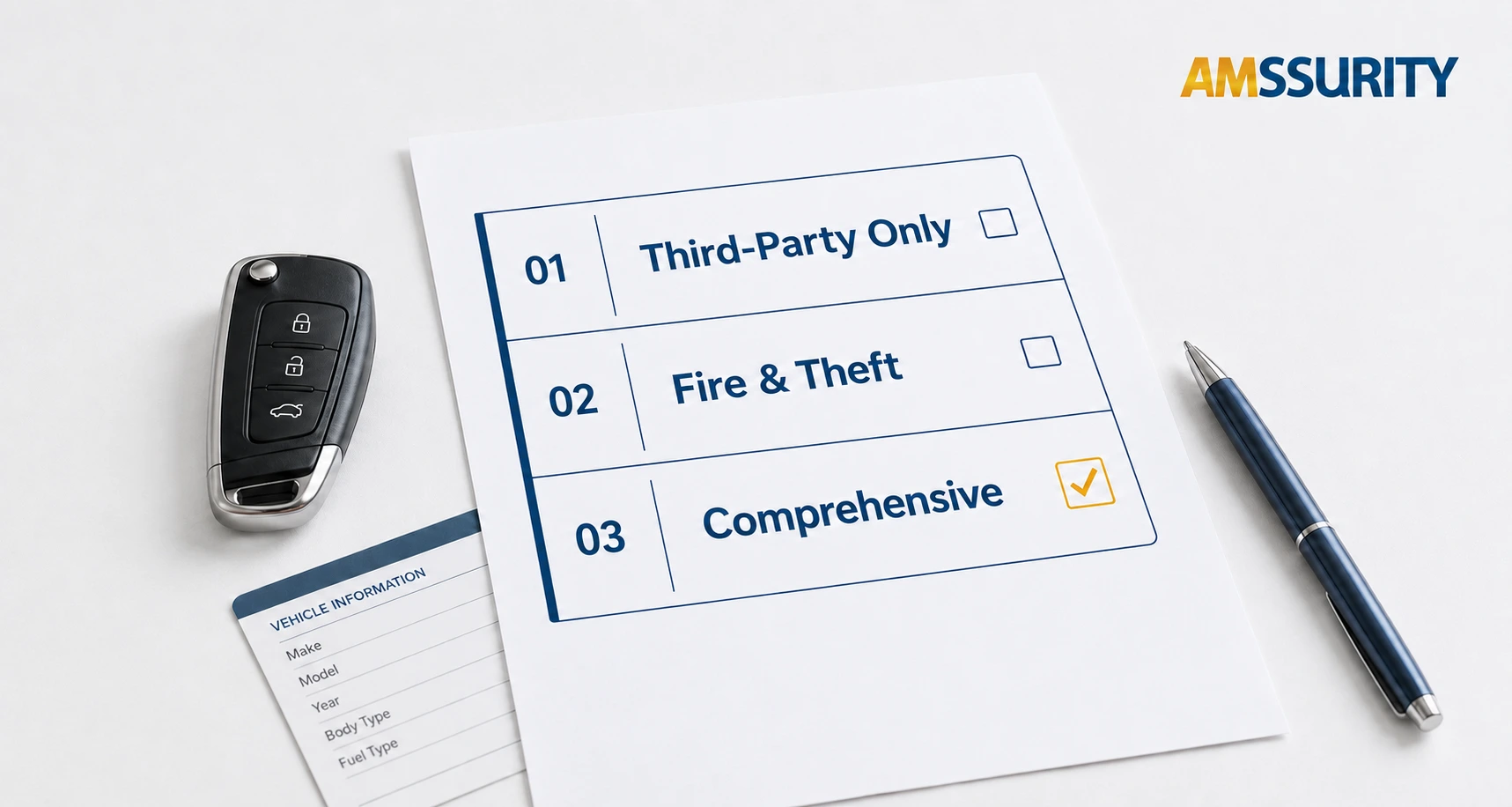
A third-party certificate can put your car legally on the road while leaving you to fund the full repair or replacement of that same car. Third-party, fire and theft adds fire and theft protection but still leaves collision damage with you. Comprehensive adds accidental damage to your vehicle, subject to excesses, exclusions, valuation and policy terms.
The right choice turns on one practical question: which loss could you absorb tomorrow without disrupting your finances, loan repayments or income?
This guide compares the three main types of car insurance in Kenya by what they pay, what remains your responsibility and the vehicles each may suit.
Table of Contents
What car insurance is legally required in Kenya?
Section 4 of the Insurance (Motor Vehicles Third Party Risks) Act, Cap. 405 requires a qualifying policy or security against third-party risks before a vehicle is used on a road.
Section 5 requires liability cover for death or bodily injury arising from that use, subject to the Act. It also says the compulsory policy is not required to cover more than KSh 3 million arising from one person’s claim.
Many third-party motor policies also cover damage to another person’s vehicle or property, up to a limit stated in the policy schedule. That contractual property-damage benefit should be checked separately from the exact statutory minimum.
The legal requirement does not pay for accidental damage, fire or theft affecting your own car. Those protections depend on whether you choose third-party only, third-party fire and theft, or comprehensive cover.
The three types of car insurance in Kenya compared
| Cover type | Third-party liability | Fire or theft of your car | Accidental damage to your car | Main cost you retain |
|---|---|---|---|---|
| Third-party only (TPO) | Yes, within the policy terms and limits | No | No | Repairing or replacing your own car after any loss |
| Third-party, fire and theft (TPFT) | Yes, within the policy terms and limits | Yes, for insured fire and theft events | No | Collision, overturning and other accidental damage to your car |
| Comprehensive | Yes, within the policy terms and limits | Yes | Yes, for insured events | Excesses, excluded causes, uninsured add-ons and amounts above applicable limits |
Policy wording differs by insurer. Always check the schedule, excesses, limits, exclusions and permitted use before paying.
Instant quote and comparison
Compare Car Insurance Options
Enter your vehicle details to compare available cover options.
Have these details ready
Policy terms, limits, excesses and acceptance conditions apply.
1. Third-party only car insurance
Third-party only is the narrowest of the three covers. It responds to legal liability to other people within the policy wording and limits. A typical TPO policy may address third-party bodily injury, death and property damage.
Subject to liability being established and the policy terms being met, it may pay compensation for third-party death or bodily injury, damage to another person’s vehicle or property where included, and related legal costs where provided.
You carry the full cost of repairing your vehicle after an accident and replacing it after theft, fire or another loss. Your own injury costs also remain with you unless another policy or benefit applies.
When could TPO make financial sense?
TPO may be reasonable where the vehicle has a modest value and you could repair or replace it without borrowing. It may also be the available option where age, condition or use prevents broader cover.
Driving confidence is a weak basis for choosing TPO. Another driver can hit you and leave the scene, lack valid insurance or dispute liability. Your repair bill remains due while recovery from the responsible party may take time or fail.
2. Third-party, fire and theft car insurance
TPFT keeps the third-party liability protection and adds cover for specified fire and theft losses affecting your vehicle. It sits between TPO and comprehensive cover.
Depending on the wording, it may cover:
- Third-party death, bodily injury and property damage.
- Loss of the insured vehicle through theft.
- Attempted or partial theft, where stated.
- Loss caused by fire, self-ignition or lightning.
TPFT usually leaves you to pay for accidental damage to your vehicle. If you collide with another car, overturn or hit an object, the policy may address the third party’s valid claim while your collision repair remains yours.
You may also remain responsible for the applicable excess, theft-prevention requirements, undeclared accessories and losses outside the defined fire and theft wording.
When could TPFT make financial sense?
TPFT may suit an owner who could manage accident repairs but could not comfortably replace the vehicle after theft or fire. It can also suit an older vehicle where comprehensive terms are unavailable or relatively expensive.
Before choosing it, check how the policy treats partial theft, accessories, keys, tracking requirements and theft involving people who had authorised access to the vehicle.
3. Comprehensive car insurance in Kenya
Comprehensive is the broadest of the three standard cover levels. It generally combines third-party liability, fire, theft and accidental damage to the insured vehicle.
Subject to the policy, it may cover:
- Collision or overturning.
- Theft and fire.
- Malicious damage.
- Specified natural events.
- Third-party bodily injury, death and property damage.
- Towing and emergency medical expenses.
- Windscreen and entertainment equipment up to stated limits.
Excess protector, political violence and terrorism, courtesy car, loss of use, road rescue and enhanced accessory limits vary by insurer. See Amssurity’s guide to motor insurance upgrades in Kenya before assuming they are included.
What remains your responsibility?
Comprehensive policies still apply excesses, exclusions, limits and conditions. The owner may remain responsible for:
- The applicable policy excess.
- Mechanical or electrical breakdown.
- Wear and tear.
- Loss arising from an undeclared or excluded use.
- Amounts above windscreen, audio or other benefit limits.
- Transport or lost income while the vehicle is being repaired.
- Injury to the owner or driver unless a medical-expense or personal-accident benefit applies.
When could comprehensive cover make financial sense?
Comprehensive deserves serious consideration when the car is financed, relatively valuable, essential to family mobility or central to earning an income, especially where a large loss would force you into debt.
Check the excess, insured value, settlement basis and repair terms. A broad policy with an unaffordable excess can still produce an uncomfortable claim.
Cover level and vehicle use are two separate decisions
TPO, TPFT and comprehensive describe the level of protection.
Private, commercial and public service vehicle classifications describe how the vehicle is used.
Both must be correct.
Financed vehicles
Start with the finance agreement. A lender may require comprehensive cover, specify acceptable insurers, require its financial interest to be noted and ask for evidence at every renewal.
For example, NCBA’s asset-finance FAQs say financed assets must remain insured through approved underwriters or intermediaries and that changes in vehicle use require written approval.
Check the lender’s requirements before reducing cover or changing use. A policy that satisfies the road-use law may still breach the finance agreement.
Privately used vehicles
For a private car, compare the premium with the losses you would retain.
A modestly valued car can still justify comprehensive cover if losing it would disrupt work, school runs or family care. A higher-value car may also justify broader cover where replacing it from savings would be difficult.
Income-generating vehicles
Tell the insurer exactly how the vehicle earns money.
Ride-hailing, taxi, chauffeur-driven hire, self-drive hire, own-goods delivery and general cartage can require different motor classes and terms. The IRA’s private motor schedule states that standard private use excludes carrying passengers for hire or reward.
For an income-generating vehicle, lost daily income or replacement transport may require a separate loss-of-use or courtesy-car benefit. Passenger liability and goods carried should also be checked rather than assumed.
A comprehensive private motor policy may still be unsuitable if the vehicle is being used for an undeclared commercial or ride-hailing purpose.
Five questions to choose the right type of car insurance in Kenya
Ask these before requesting quotations:
- Could I replace the car from savings if it were stolen or written off tomorrow?
If no, TPO leaves a major exposure. - Could I fund a substantial accident repair?
If no, TPFT may still be too narrow. - Is the vehicle financed?
Follow the insurance conditions in the finance agreement. - How is the vehicle actually used?
Declare private, commercial, ride-hailing, PSV or other income-generating use accurately. - What would I still pay?
Compare the excess, insured value, third-party property limit, theft conditions and repair terms.
Which type of car insurance should you choose?
Choose the narrowest cover whose excluded losses you can genuinely carry.
TPO may suit a low-value vehicle that the owner can repair or replace from available funds.
TPFT may suit an owner who can carry accidental repair costs but needs protection from theft or fire.
Comprehensive is usually the starting point for financed, higher-value and heavily depended-on vehicles, provided the use class, excess and policy terms are suitable.
The cover name is only the first decision. The policy still has to match the vehicle, its use and the size of loss you can afford to keep.
Amssurity Motor Quote Pack
Compare 3 Motor Insurance Quotes
Get three matched options with a one-page comparison of the cover and terms that matter.
Your comparison covers
Policy terms, limits, exclusions, excesses and underwriting acceptance apply.
Frequently asked questions
Car insurance FAQs
1 Is third-party car insurance mandatory in Kenya?
Yes. Section 4 of Kenya’s Cap. 405 requires a qualifying policy or security before a vehicle is used on a road. Section 5 covers liability for death or bodily injury; check the policy schedule for any third-party property-damage benefit.
2 Does third-party insurance cover damage to my car?
No. TPO does not cover damage to your car. TPFT adds insured fire and theft cover, while comprehensive can cover insured accidental damage.
3 Can an older car get comprehensive insurance in Kenya?
Possibly. Insurers consider the vehicle’s age, condition, value and use, and may require an inspection. Some older cars may only qualify for TPFT or TPO.
Compare car insurance with Amssurity Insurance Online today. Amssurity Insurance will support you through the comparison, purchase and in claims.
Reviewed and updated: 15 July 2026
Reviewed by: Agnes Mukulu, Principal Agent, Amssurity Insurance Agency
Source basis: Motor Vehicle Third Party Risks Act (Cap. 405) and current motor-policy wording.

Founder & Insurance Advisor | Amssurity Insurance Agency, an IRA-licensed agency in Nairobi
Agnes Mukulu advises individuals, families, SMEs and diaspora Kenyans on health, motor, business, life and international medical insurance. Having reviewed hundreds of policies, quotations and benefit schedules, she helps clients look beyond premiums to understand benefits, exclusions, waiting periods, excesses and claims requirements. She founded Amssurity to make insurance guidance clearer, more transparent and more practical, helping clients choose suitable cover and understand how it should work when they need it most.